
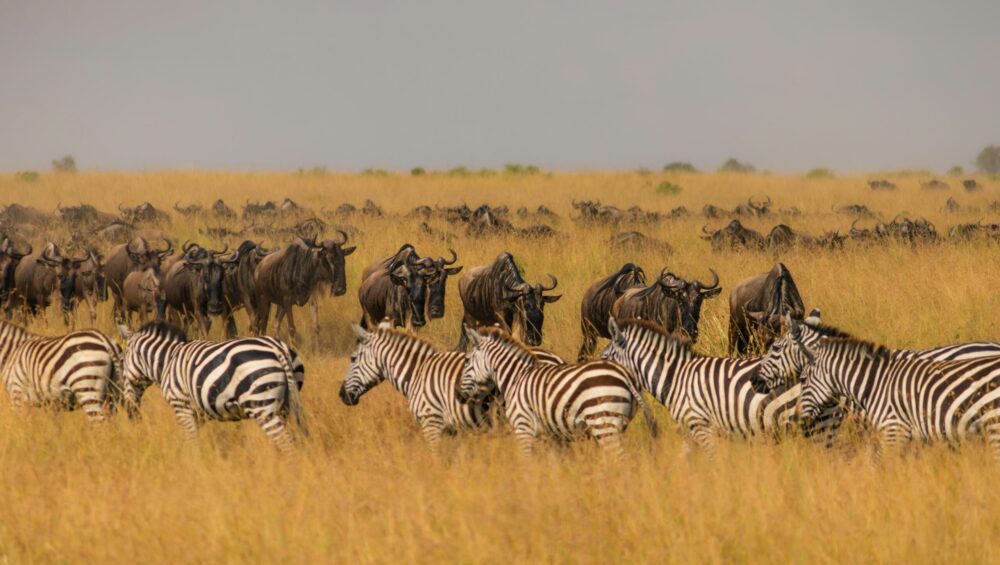
There are safaris, and then there is the Great Migration — the largest land-based wildlife movement on the planet. Close to two million wildebeests, zebras, and gazelles move in a circular journey between Tanzania’s Serengeti and Kenya’s Masai Mara, following rain, fresh grass, and ancient instinct.
Seeing the Migration isn’t just “a trip.”
It feels like stepping into a live documentary — except you’re not watching from a screen; you’re in the very place where the dust rises, the herds run, and the air vibrates with thousands of hooves.
This spectacle is raw, dramatic, and deeply moving. Every turn brings something different — a newborn calf taking its first steps, a lioness waiting patiently in tall grass, zebras guiding each other across a river, or thousands of wildebeests running in synchronized motion toward greener land.
For Indian travellers who dream of a real wildlife experience, this is the safari of a lifetime.
What Exactly Is the Great Migration?
The Great Migration is a never-ending circular journey where herds travel in search of food and water. They move from:
Serengeti (Tanzania) → Masai Mara (Kenya) → Serengeti (Tanzania)
The movement is instinctive and ancient — the animals have followed this route for centuries.
It includes:
- Calving season (thousands of babies born each day)
- Long-distance movement across the savannah
- Dramatic river crossings where crocodiles wait
- Predator action — lions, cheetahs, hyenas
- Massive herds running in perfect rhythm
No two days look the same. Every moment is unpredictable.
Best Time to See the Great Migration
Because the Migration keeps moving, your travel dates decide what you will see.
December – March: Calving Season (Serengeti, Tanzania)
The southern Serengeti turns into a massive nursery.
Over 8000–10,000 calves are born every day — a tender yet dramatic time, as predators are always nearby.
What you see:
- Baby wildebeests taking their first steps
- Cheetahs & hyenas hunting
- Open landscapes perfect for photography
April – May: Herds Move North (Central Serengeti)
Grass is long, skies dramatic, and the herds start gathering for their long journey.
What you see:
- Dense herds
- Lions and leopards frequently spotted
- Stunning green landscapes
June – July: Grumeti River Crossing (Western Corridor, Tanzania)
A lesser-known but thrilling crossing, with fewer crowds.
What you see:
- Early river crossings
- Huge crocodiles in Grumeti River
- Herds preparing for the Mara crossing
July – October: The Iconic Mara River Crossing (Masai Mara, Kenya)
This is the peak of the Migration.
Herds gather at the river, hesitate, turn back, run forward, and finally make the leap into the water — one of the world’s most dramatic wildlife sightings.
What you see:
- The famous “jump” into Mara River
- Crocodile encounters
- Big cats hunting
- Endless plains filled with animals
November: Return to Serengeti
The herds move south again as rains arrive.
What you see:
- Long, beautiful formations of migrating herds
- Excellent predator sightings along the way
Masai Mara vs. Serengeti! Which Is Better?
Both are incredible, but each offers something unique.
Serengeti (Tanzania)
- Larger, wilder, and more untouched
- Better for calving season
- Great for early river crossings (Grumeti)
- More spread out — fewer tourists
Masai Mara (Kenya)
- Best for the Mara River crossing
- Easier to access for first-time travellers
- Great for big cat sightings
- Compact area = more frequent wildlife action
Best option?
If this is your first safari, Masai Mara in July–October is ideal. If you want fewer crowds and raw landscapes, choose Serengeti.
What the River Crossing Really Feels Like
No blog or photo prepares you for this moment.
You hear them before you see them — a deep rumbling sound like distant thunder. Then the dust rises. The animals gather at the riverbank, confused, unsure, scanning for danger.
Minutes pass.
Sometimes hours.
Then suddenly, one brave animal makes the first jump — and within seconds, thousands follow.
The water churns, crocodiles wait still, hooves splash, calves cry out, and the river becomes a moving force of nature.
It’s intense, emotional, chaotic — and unforgettable.
How Many Days Do You Need for the Great Migration?
For a meaningful experience:
Masai Mara: 4–5 days
Serengeti: 5–6 days
Combined Kenya + Tanzania: 8–10 days
More days = higher chance of witnessing dramatic sightings.
World Tours will help you pick the exact region based on your travel month.
Photography Tips for the Migration
- Always carry two lenses (70–200mm + 100–400mm)
- Shoot during early morning or evening
- Don’t forget dust protection for your camera
- Switch off flash during sightings
Stay patient — great moments take time
Why the Great Migration Is Worth the Trip
Every traveler returns with a different story:
some remember the river crossing, others the lion cubs hiding in grass, some the quiet moments during sunrise when the plains turn gold.
But everyone remembers the feeling — the sense that they witnessed something ancient, untouched, and incredibly powerful.
Few journeys in the world offer such raw beauty.
Plan Your Great Migration Safari with World Tours
At World Tours, we plan migration safaris based on:
- Your travel month
- Your preferred level of comfort
- Your photography interests
- Whether you want Kenya, Tanzania, or both
You get a fully guided, hassle-free, safe, and personalized experience, the kind that lets you focus on the beauty while we handle all the logistics.
Let us craft your Great Migration journey, the safari you’ll remember for the rest of your life.