


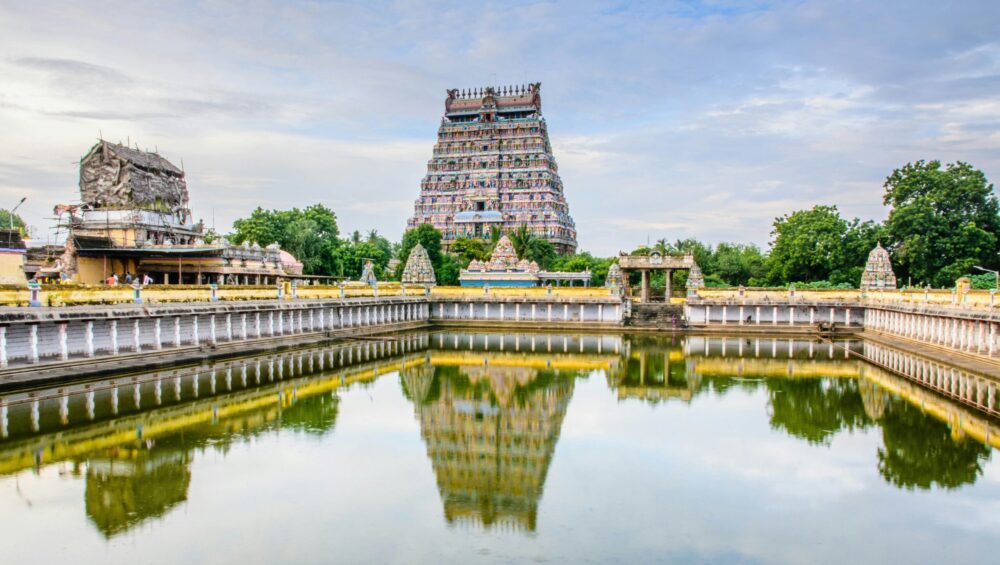
Some journeys are not about distance, but about depth.
The Tamil Nadu temple trail is one such journey.
Spread across towns, rivers, and coastal plains, the temples of Tamil Nadu are not isolated monuments — they are living centres of faith, art, music, and daily life. Here, temples are not visited only on special occasions; they shape the rhythm of the day, the calendar of the year, and the identity of entire regions.
To travel through Tamil Nadu’s temples is to understand how devotion became architecture, and how architecture became a way of life.
Dravidian Architecture: A Style That Commands Presence
Tamil Nadu’s temples are instantly recognisable by their towering gopurams, massive stone courtyards, long pillared corridors, and intricate sculptures that seem endless in detail. Built primarily under the Pallava, Chola, Pandya, and Vijayanagara dynasties, these temples were designed not only for worship but for community gatherings, learning, music, and dance.
Every structure follows a cosmic order — from the outer gateway that welcomes the world, to the inner sanctum that holds stillness. Unlike northern temples that rise vertically, Dravidian temples expand outward, encouraging the devotee to walk, observe, and gradually move inward, both physically and mentally.
Chidambaram: Where Space Itself Is Worshipped
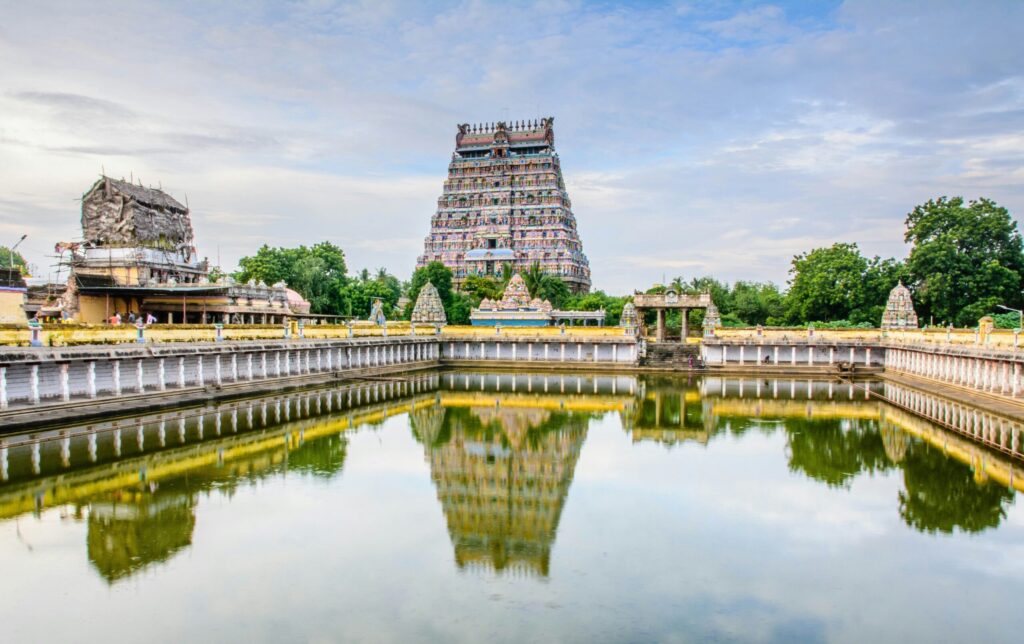
Chidambaram is not just a temple town; it is a philosophical idea made physical. The Nataraja Temple here is dedicated to Lord Shiva as the cosmic dancer — a symbol of creation, preservation, and dissolution. What makes Chidambaram unique is its focus on akasha, or space, represented by an empty sanctum that invites contemplation rather than visual worship.
The rituals here are ancient and precise, carried out by hereditary priests whose traditions go back centuries. Visiting Chidambaram feels less like sightseeing and more like witnessing continuity — a reminder that belief systems here have survived through time not by rigidity, but by depth.
Thanjavur: The Chola Empire in Stone
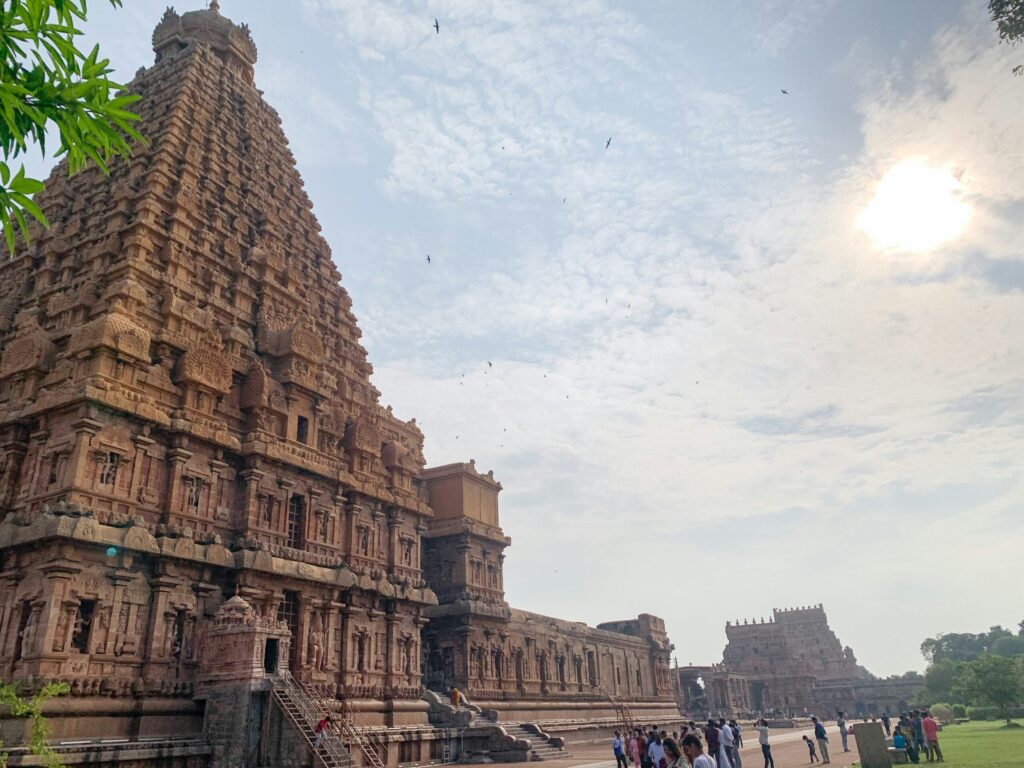
The Brihadeeswarar Temple in Thanjavur is one of India’s greatest architectural achievements and a UNESCO World Heritage Site. Built by Raja Raja Chola I in the 11th century, the temple stands as a declaration of confidence, power, and artistic excellence.
Its massive vimana rises above the town, visible from afar, while the perfectly balanced proportions reveal advanced engineering knowledge. What is remarkable is not just the scale, but the precision — the granite blocks, the symmetry, and the way the structure has endured for nearly a thousand years. Thanjavur is where Tamil Nadu’s temple trail reaches monumental intensity.
Madurai: Faith That Never Sleeps
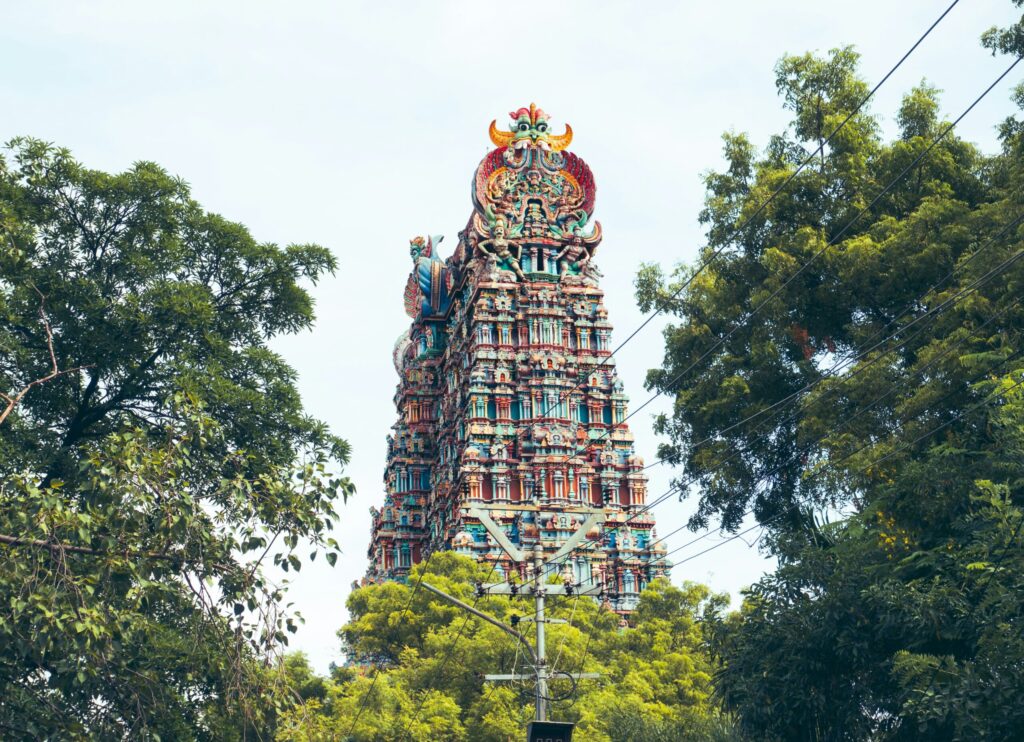
Madurai’s Meenakshi Amman Temple is not quiet, and it is not meant to be. This is a temple that lives and breathes with the city around it. The brightly painted gopurams are covered in thousands of figures, each telling a story, each renewed regularly as part of ongoing tradition.
Inside, the temple is a maze of corridors, shrines, halls, and sacred tanks. Daily rituals unfold with music, lamps, chants, and movement. To visit Meenakshi Temple is to experience devotion as celebration — vibrant, collective, and deeply rooted in everyday life.
Rameswaram: Pilgrimage at the Edge of the Land
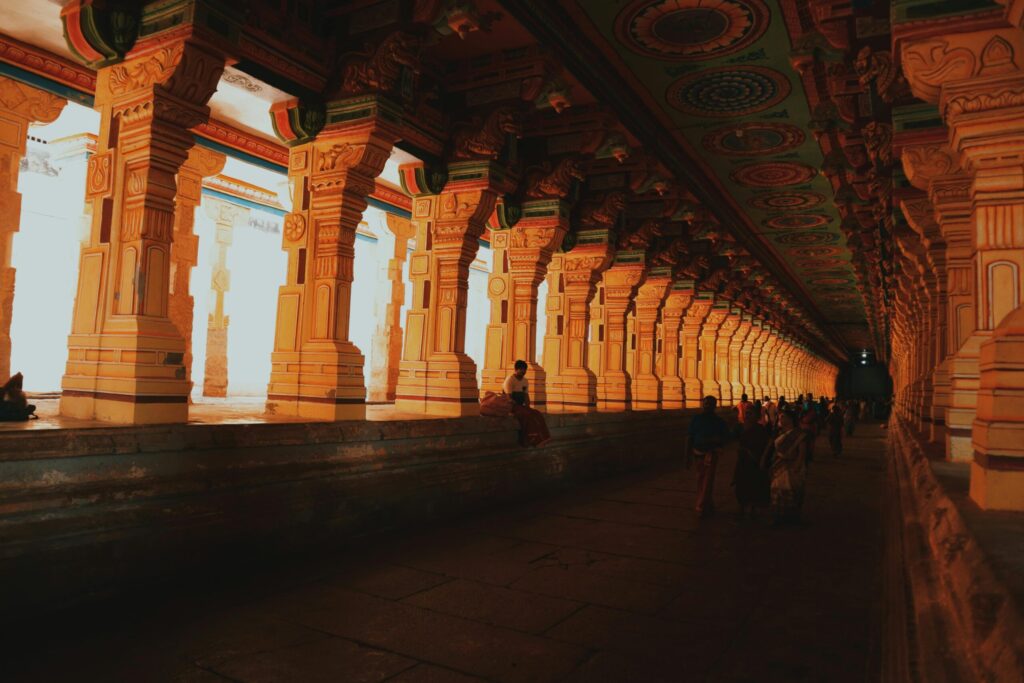
Rameswaram occupies a unique place in India’s spiritual geography. Located on an island, connected by long bridges and surrounded by the sea, it feels both remote and deeply symbolic. The Ramanathaswamy Temple is known for its long pillared corridors — among the longest in the world — and its sacred water tanks used for ritual purification.
For many travellers, Rameswaram is not just a temple visit but a spiritual journey tied to the Ramayana and ideas of duty, devotion, and closure. The quiet rhythm of the island contrasts with the intensity of belief, creating a powerful emotional experience.
Kanchipuram: The City of Thousand Temples
Once a major centre of learning and spirituality, Kanchipuram is known for its ancient temples dedicated to Shiva and Vishnu. Temples like Ekambareswarar and Varadaraja Perumal reflect different aspects of Dravidian design while maintaining philosophical depth.
Kanchipuram also represents balance — between scholarship and devotion, ritual and reasoning. Its streets, lined with silk weaving traditions, show how temple towns supported entire ecosystems of art and livelihood.
Srirangam: A Temple That Is a City
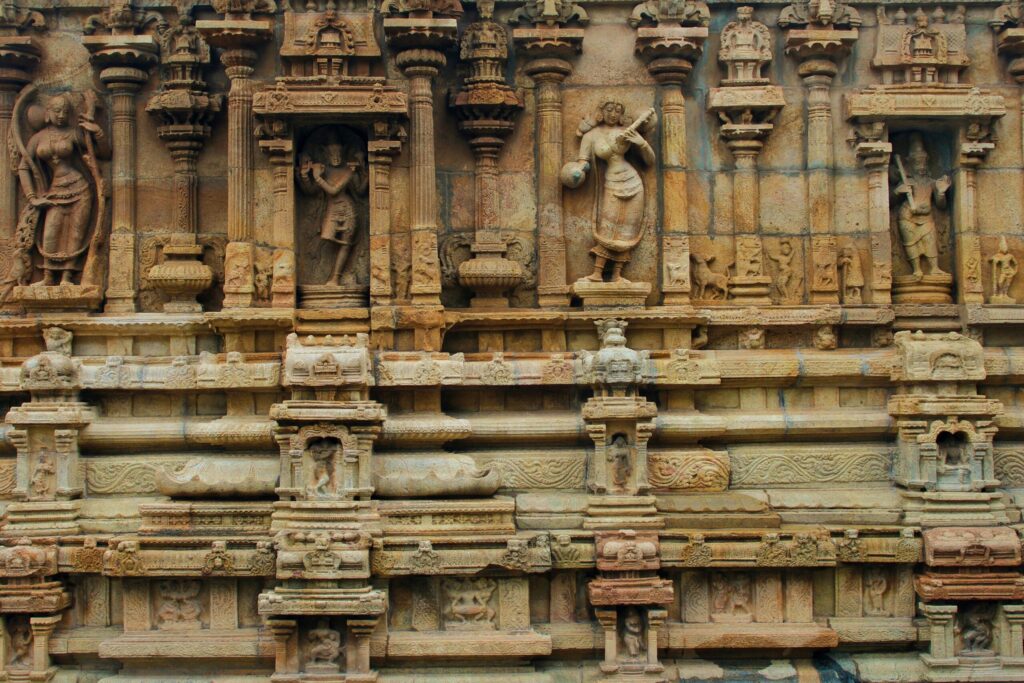
The Sri Ranganathaswamy Temple in Srirangam is not just a temple; it is a city within walls. With seven concentric enclosures, it represents spiritual progression through physical movement. Dedicated to Lord Vishnu, the temple complex includes streets, markets, homes, and sacred spaces — all organised around devotion.
Walking through Srirangam gives a rare glimpse into how temple towns functioned as complete urban systems, long before modern city planning.
What sets this trail apart is continuity. These temples are not preserved ruins; they are living institutions. Festivals still follow ancient calendars. Music and dance forms like Bharatanatyam evolved within temple spaces. Stone carvings are not frozen history — they are references still understood by those who worship here.
This is heritage that moves forward without losing its roots.
Best Time to Travel the Temple Trail
The most comfortable time to explore Tamil Nadu’s temples is between October and March, when temperatures are milder and festivals bring additional cultural richness. Summers can be intense, especially for long temple walks, while monsoons add humidity but also enhance the atmosphere in temple towns.
Experiencing the Trail Thoughtfully
This trail is best done slowly, over multiple days, allowing time for rest, observation, and understanding. Rushing through temples misses the point — each place reveals itself gradually, through architecture, ritual, and interaction with locals.
Plan Your Tamil Nadu Temple Trail with World Tours
The Tamil Nadu temple trail deserves thoughtful planning — balancing travel distances, temple timings, and cultural experiences. World Tours designs temple journeys that respect local traditions while ensuring comfort, context, and meaningful pacing.
If you’re looking to experience India’s spiritual and architectural heritage in its most living form, the Tamil Nadu Temple Trail is unmatched — and World Tours is here to plan it for you.