


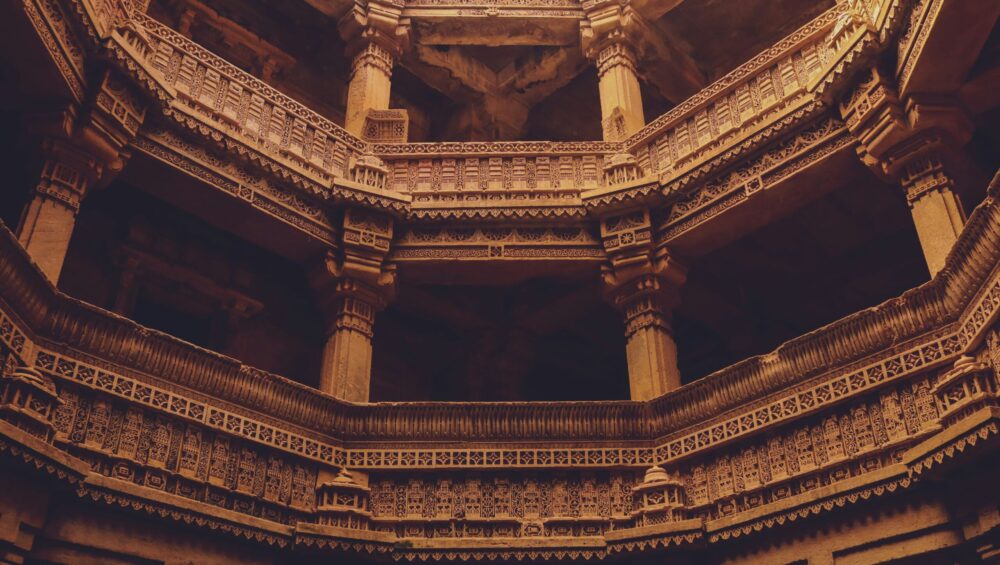
Gujarat is one of those states where history doesn’t sit behind glass. It lives in old city lanes, carved stone, stepwells that once quenched entire towns, and temples that still shape daily life. A Gujarat heritage trail is perfect for travellers who want more than sightseeing—people who enjoy understanding how a place was built, why trade routes mattered, how craftsmanship evolved, and why culture here feels so rooted yet so open to the world.
This guide brings together all UNESCO World Heritage Sites in Gujarat and pairs them with other heritage-rich places that complete the experience. Think of it as a trail you can do in parts—Ahmedabad-based, North Gujarat, Saurashtra, or Kutch—depending on your time and interests.
Gujarat’s UNESCO World Heritage Sites (Must-Visit Core of the Trail)
Historic City of Ahmedabad (UNESCO)
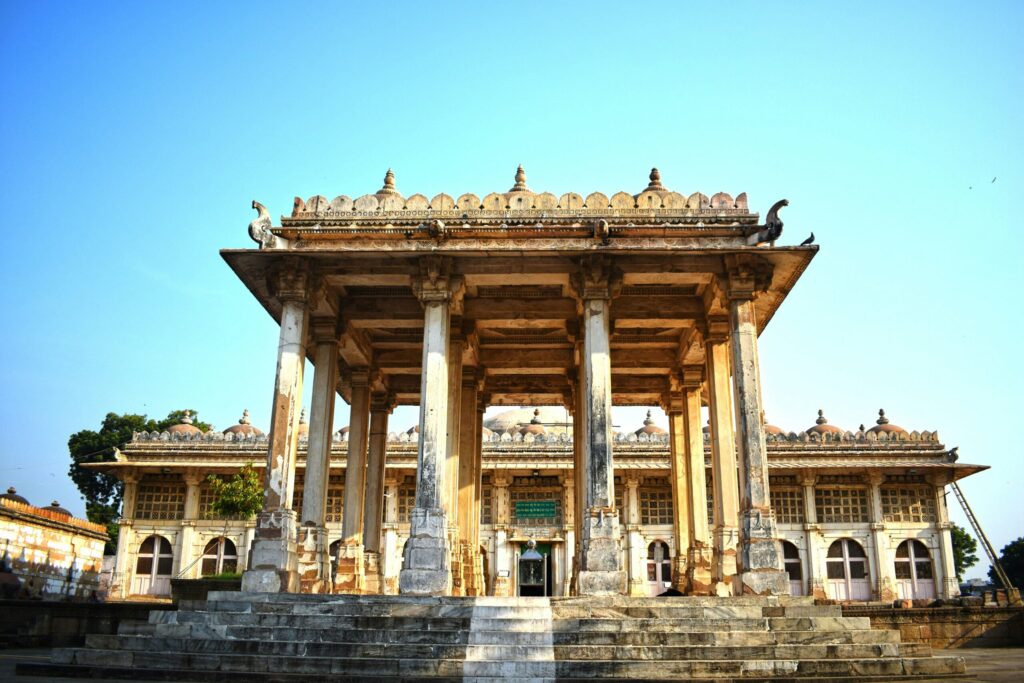
Ahmedabad’s old city is one of India’s most underrated heritage experiences because it’s not a single monument—it’s an entire living urban culture. The charm lies in its pol houses (traditional neighbourhoods), carved wooden facades, secret courtyards, and narrow lanes that suddenly open into busy chowks. You’ll also find historic mosques, stepwells, and community spaces that show how the city blended trade, faith, and daily life. A heritage walk here is not optional—it’s the best way to understand Ahmedabad beyond modern cafés and malls.
Add-on places nearby: Jama Masjid, Sidi Saiyyed Jali, Manek Chowk, Teen Darwaza
Rani ki Vav, Patan (UNESCO)
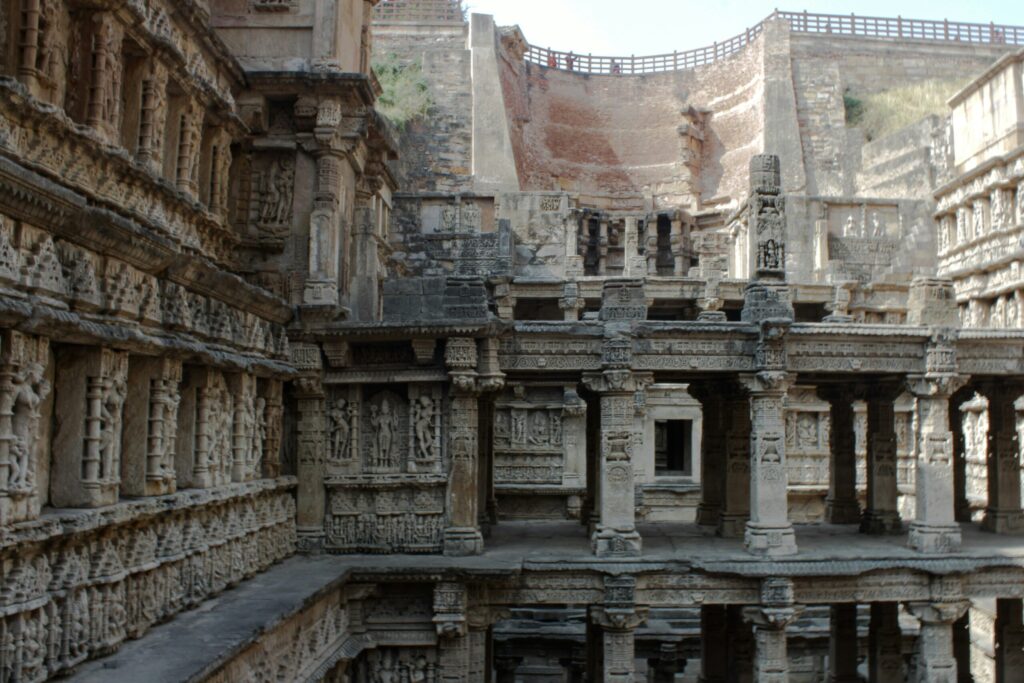
Rani ki Vav is not just a stepwell—it’s storytelling in stone. Built as a grand subterranean structure, it descends through sculpted corridors filled with intricate carvings of gods, goddesses, celestial beings, and symbolic motifs. Stepwells in Gujarat were never only functional; they were social spaces, places of ritual, and architectural masterpieces that proved a society’s understanding of water management and artistry. Visiting Rani ki Vav feels like entering a hidden palace beneath the earth.
Add-on places nearby: Patan’s old town textiles, local craft clusters
Champaner–Pavagadh Archaeological Park (UNESCO)
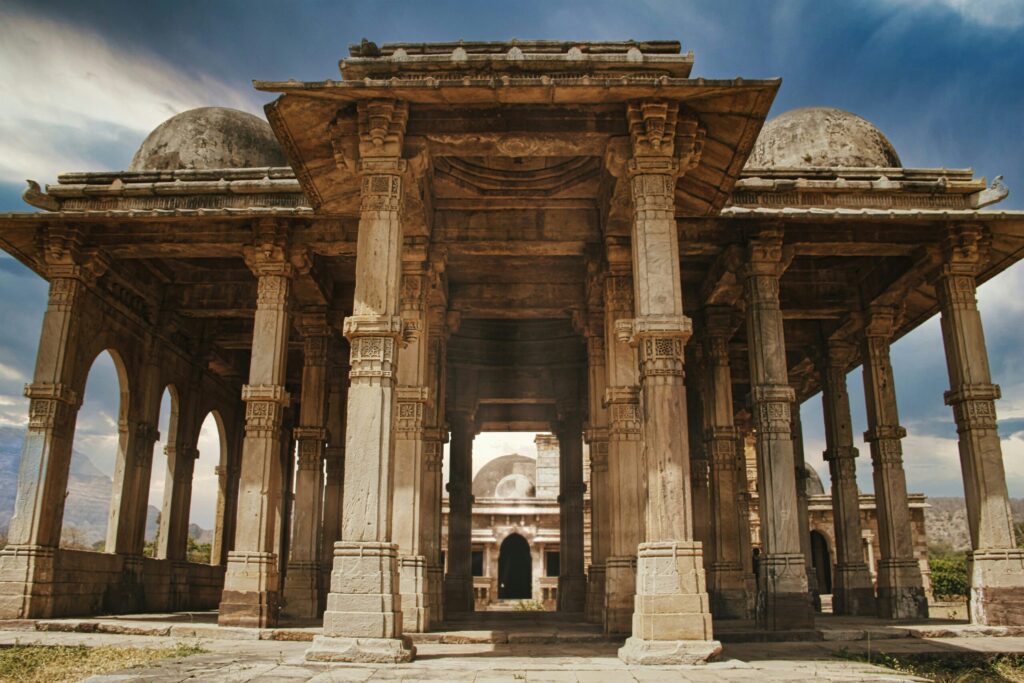
Champaner-Pavagadh is one of the most layered heritage sites in India, where history spreads across hills, temples, mosques, stepwells, and ruined structures. The Pavagadh hill has deep spiritual significance, while Champaner below reflects medieval urban planning and Indo-Islamic architecture. What makes this site special is the feeling that you’re walking through multiple time periods at once—religious, royal, and everyday life all overlapping in one landscape.
Add-on places nearby: Kalika Mata Temple (Pavagadh hill)
Dholavira, Kutch (UNESCO)
Dholavira is a powerful reminder that India’s civilisational story is much older than many travellers realise. This Harappan city site showcases advanced town planning, water systems, reservoirs, and a scale of organisation that feels astonishing even today. The vastness of the landscape around it adds to the experience—you can almost imagine the city functioning centuries ago. If you love archaeology, Dholavira is one of the most meaningful UNESCO sites in the country.
Add-on places nearby: Great Rann of Kutch (seasonal), Kutch craft villages
More Heritage Places You Should Add to Your Gujarat Trail
Modhera Sun Temple (Mehsana)
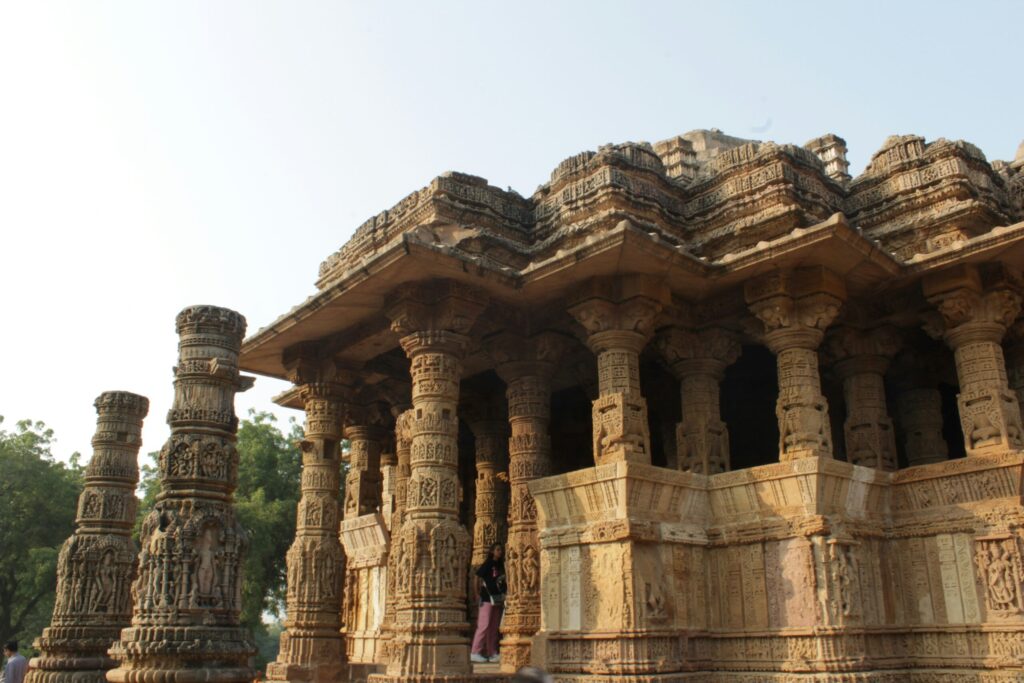
Modhera’s Sun Temple is not a “quick stop.” It’s a beautifully composed temple complex with a step-tank, sculpted halls, and quiet symmetry that feels calming even when you’re surrounded by stone carvings. What makes Modhera special is the balance—between architecture, light, and design. It’s perfect for travellers who loved Konark and want to see how sun worship shaped different regions of India in different styles.
Adalaj Stepwell (near Ahmedabad/Gandhinagar)
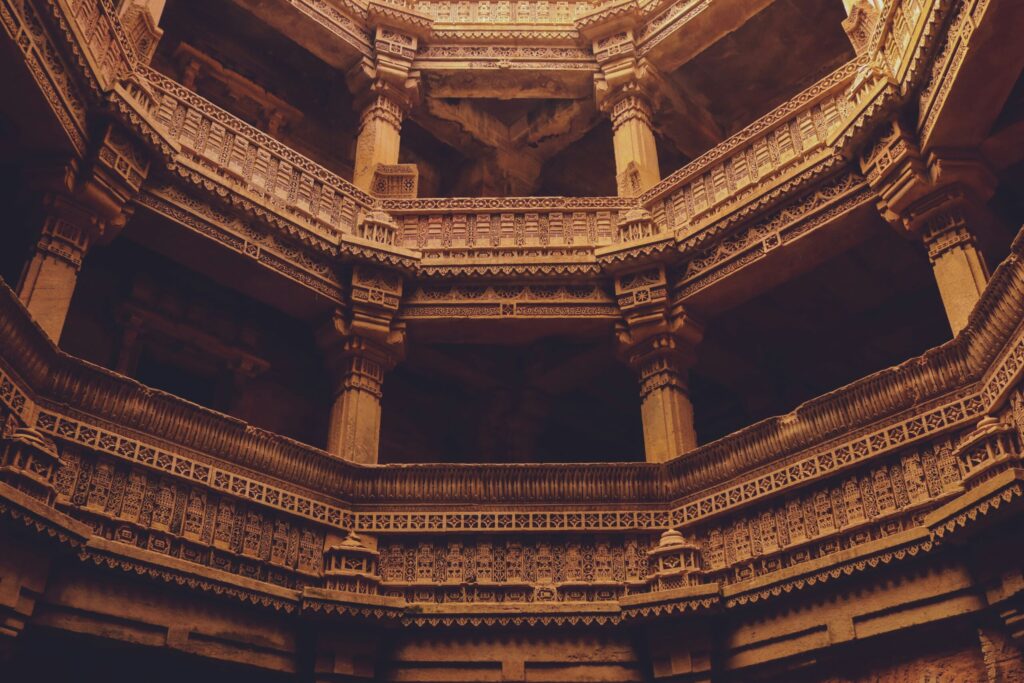
Adalaj is one of the easiest heritage experiences to include because it’s close to Ahmedabad, yet it feels like stepping into a cool, carved sanctuary. The deeper you descend, the more detailed the stonework becomes. It’s a wonderful example of how Gujarat treated water structures with reverence and beauty.
Junagadh – Forts, Gates & Royal History
Junagadh is a heritage city that deserves more attention. The Uparkot Fort area, old gates, and surrounding monuments reflect layers of rule and resilience. It’s also a strong base to combine with Gir and Somnath depending on the kind of trip you’re building—heritage + nature or heritage + spirituality.
Somnath Temple (Saurashtra)
Somnath is not UNESCO, but it is one of India’s most powerful spiritual heritage sites. Even for travellers who are not religious, Somnath’s coastal setting and its story of repeated rebuilding make it emotionally significant. It often fits beautifully into a Saurashtra heritage circuit alongside Dwarka and Porbandar.
Dwarka – Temple Town and Coastal Faith
Dwarka has a distinct energy—ancient, coastal, devotional. The Dwarkadhish Temple area and nearby sites create a strong cultural circuit. If you prefer spiritual heritage, Dwarka is essential. If you prefer architecture and history, Dwarka still works because it shows how temple towns shaped trade, movement, and settlement patterns.
Lothal – Harappan Port City (Near Ahmedabad)
Often overshadowed by Dholavira, Lothal is still deeply important because it reveals Gujarat’s ancient relationship with maritime trade. As a Harappan-era port site, it offers insight into how early civilisation connected with the wider world. This fits perfectly for travellers interested in archaeology but short on time compared to Kutch.
Bhuj & Kutch Craft Heritage
Kutch is not only about landscapes; it’s one of India’s richest living craft regions. Bhuj is a gateway to craft villages known for embroidery, weaving, bandhani, and leatherwork. Including Kutch in a heritage trail gives travellers something UNESCO sites can’t always give—direct interaction with living artisans and traditions passed through generations.
How to Plan a Gujarat Heritage Trail
Option 1: Ahmedabad + North Gujarat (3–5 Days)
This route covers Ahmedabad’s old city, Adalaj, Modhera, and Patan (Rani ki Vav). It’s ideal for travellers who want heritage depth with short travel distances and good comfort.
Option 2: Vadodara + Champaner (2–3 Days)
Perfect for a weekend or short break—Champaner-Pavagadh plus Vadodara’s cultural side. Works well for travellers coming from Maharashtra.
Option 3: Kutch Heritage (4–6 Days)
A slower and more immersive route that includes Dholavira and Bhuj’s craft clusters, with seasonal additions like the Rann. Best for travellers who enjoy archaeology, landscapes, and culture together.
Option 4: Saurashtra Spiritual & Heritage (5–7 Days)
Junagadh + Somnath + Dwarka (and optional Gir). This route suits travellers who want heritage with strong spiritual anchors.
Best Time to Do the Gujarat Heritage Trail
The best season is October to March, when the weather is pleasant for city walks, archaeological sites, and temple visits. Summers are harsh in many regions of Gujarat, especially Kutch and Champaner. Winter also brings cultural events and, in Kutch, the best conditions for desert travel.
Plan Your Gujarat Heritage Trail with World Tours
Gujarat heritage travel becomes truly enjoyable when the itinerary is paced well—because monuments and sites need time, not rush. World Tours designs Gujarat heritage journeys that combine UNESCO sites with cultural add-ons like stepwells, temple towns, craft villages, and local food experiences—while keeping travel smooth and comfortable.
Tell us your travel days and interests (UNESCO-focused, spiritual heritage, archaeology, or crafts) and World Tours will curate the perfect Gujarat heritage trail for you.