


There are places where history is preserved, and then there are places where history still breathes.
Hampi belongs to the second kind.
Set amid a dramatic landscape of giant boulders, winding rivers, and scattered ruins, Hampi was once the glorious capital of the Vijayanagara Empire—one of the richest and most powerful kingdoms in the world during the 14th and 15th centuries. Today, what remains is not silence, but a deep sense of presence. You don’t just see Hampi; you move through it, stone by stone, story by story.
This is not a destination to rush. Hampi asks for time, curiosity, and respect.
Virupaksha Temple: The Living Heart of Hampi
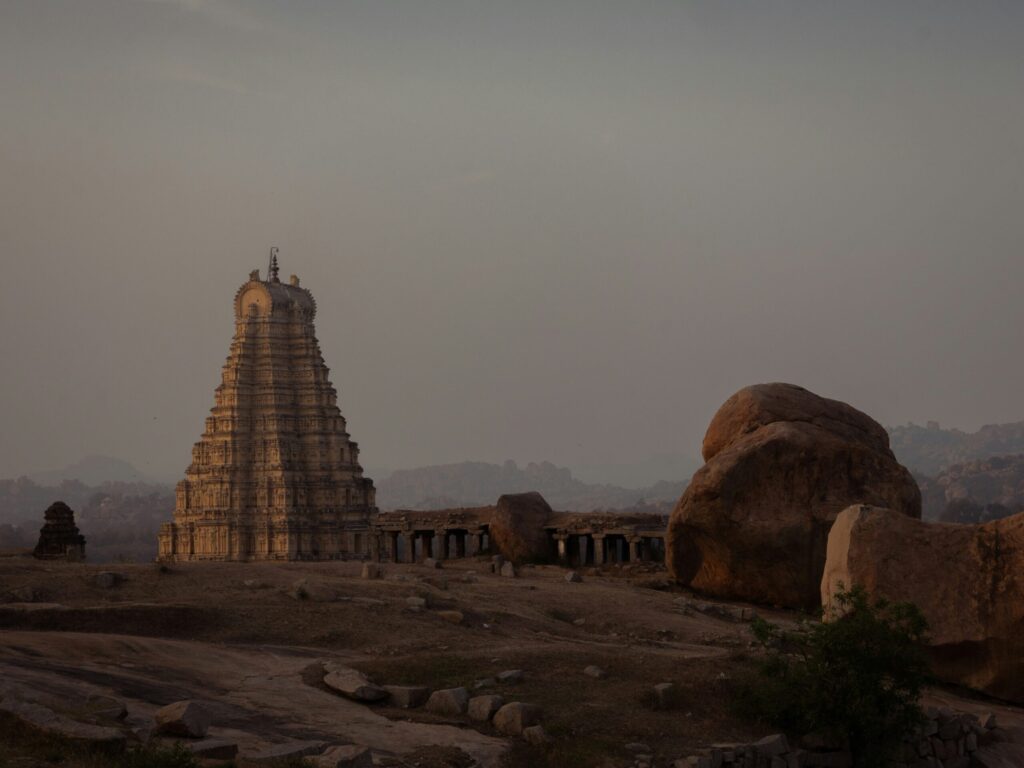
Virupaksha Temple is where Hampi’s past meets its present. Unlike most ruins, this temple is still active, with daily prayers, festivals, and pilgrims arriving from across Karnataka and beyond. The towering gopuram rises above the surrounding landscape, guiding you instinctively toward it as you walk through the bazaar street. Inside, the atmosphere shifts—chants, incense, and soft light replace the harsh sun outside. This continuity of worship, uninterrupted for centuries, gives Virupaksha a deeply grounding energy. It reminds you that Hampi was not just an empire—it was a living spiritual city.
Vittala Temple: Stone That Learned to Sing
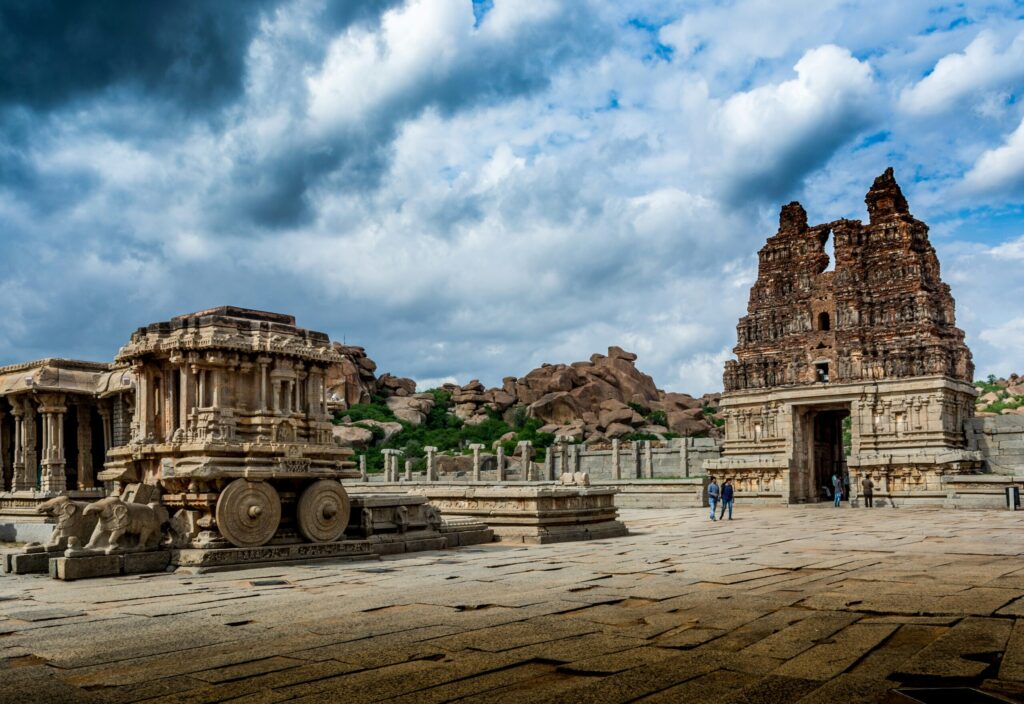
The Vittala Temple complex is often the most anticipated stop in Hampi, and rightly so. This is where architecture becomes almost unbelievable. The famous stone chariot stands proudly in the courtyard, while the pillared halls inside reveal something extraordinary—the musical pillars. When gently tapped, they produce different notes, showcasing the advanced understanding of acoustics possessed by Vijayanagara artisans. Walking through Vittala Temple feels like witnessing a civilisation at the height of its confidence, creativity, and precision. It is not grand in size alone, but in imagination.
Hampi Bazaar: Echoes of Trade and Celebration
Stretching out from the Virupaksha Temple, Hampi Bazaar was once a thriving commercial centre filled with traders, performers, and travellers from distant lands. Today, the long street lined with stone pavilions feels calm, almost reflective. As you walk through, it’s easy to imagine colourful markets, horses brought from Arabia, and festivals filling the space with sound and movement. The bazaar’s openness makes it one of the best places to pause, observe, and absorb the scale of everyday life in the empire.
Lotus Mahal: Grace Within the Royal Enclosure
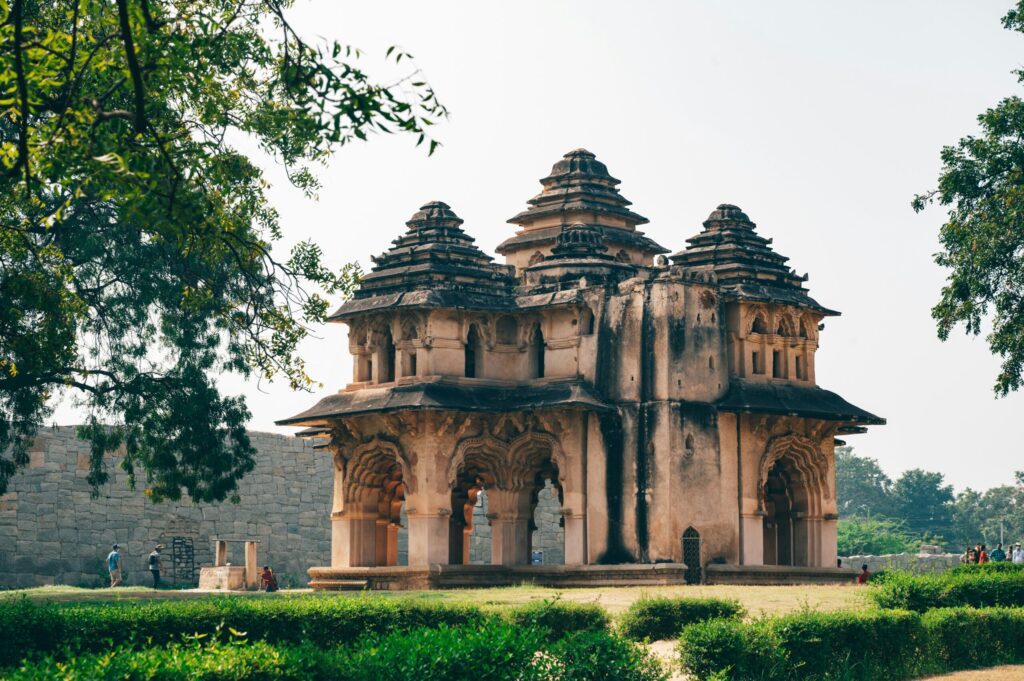
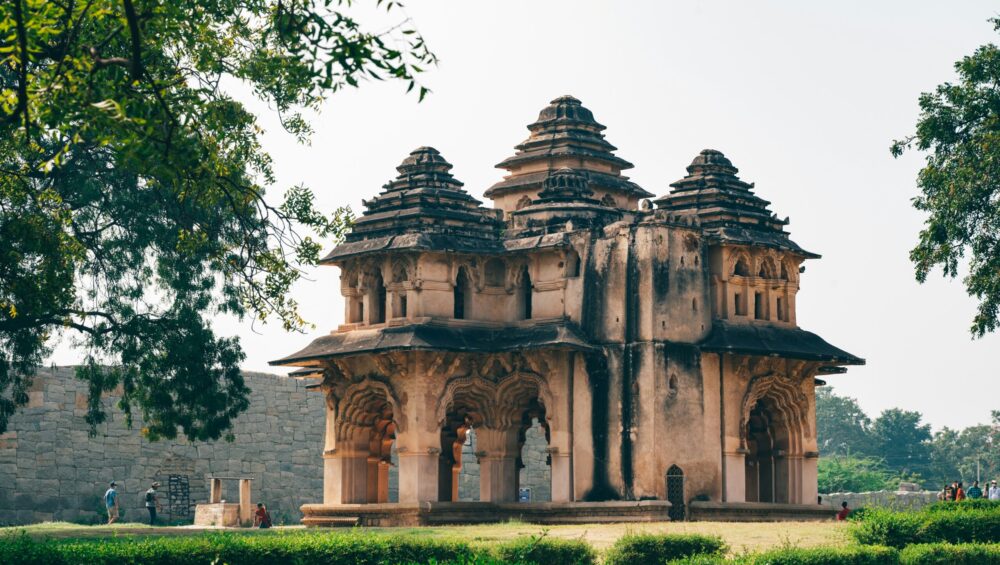
Located inside the Zenana Enclosure, the Lotus Mahal stands out for its elegance rather than grandeur. Built as a pleasure pavilion for royal women, it blends Islamic arches with Indian design sensibilities. The structure feels airy and balanced, designed to stay cool even during harsh summers. Unlike temples meant for devotion, the Lotus Mahal speaks of leisure, refinement, and thoughtful architecture—an insight into how the royal household lived beyond politics and warfare.
Elephant Stables: Strength Meets Symmetry
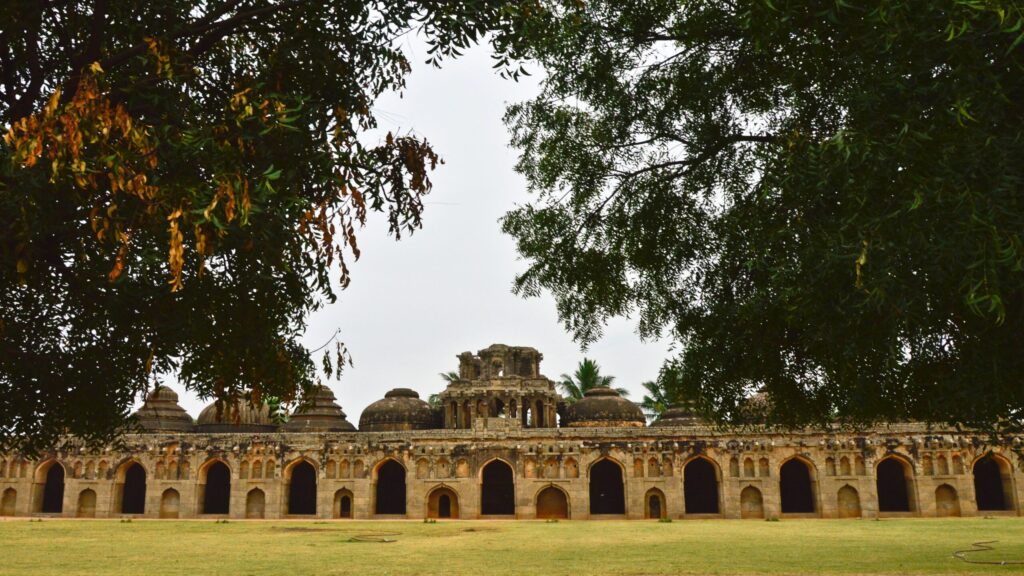
A short walk from the Lotus Mahal brings you to the Elephant Stables, where the empire’s royal elephants were once housed. The row of domed chambers is imposing yet orderly, reflecting the importance of elephants in warfare, ceremonies, and transport. Each chamber is spacious and well-ventilated, showing careful planning rather than brute construction. Standing here, you begin to understand how deeply organised the Vijayanagara Empire was—even its animals were given architectural dignity.
Queen’s Bath: A Glimpse of Royal Leisure
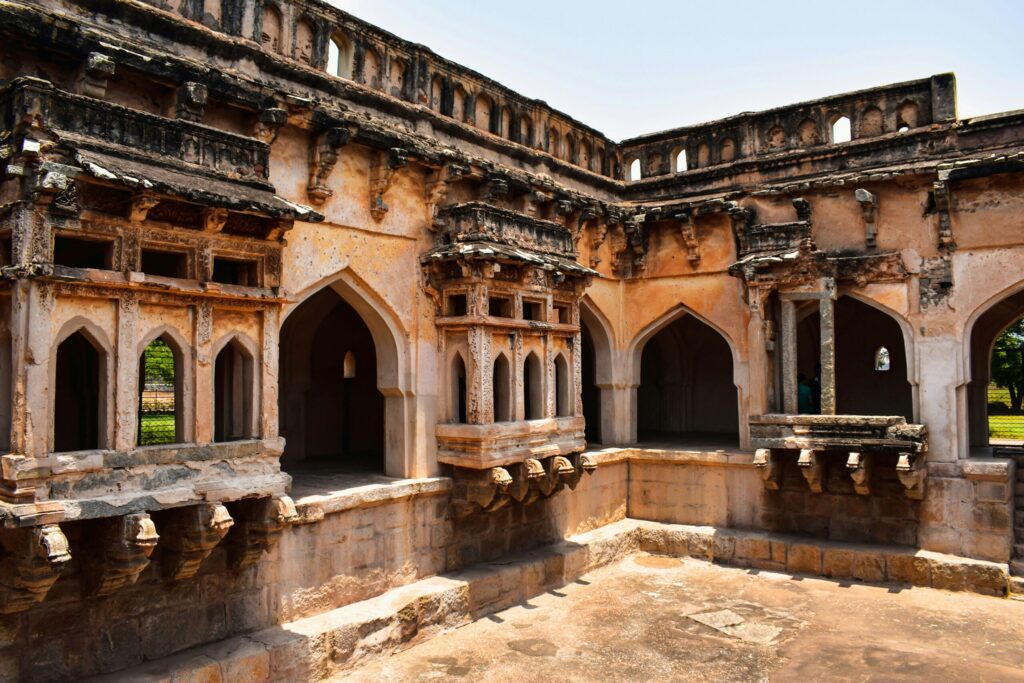
The Queen’s Bath offers another perspective on life within the empire. This large rectangular structure once served as a private bathing space for royalty, surrounded by arched corridors and decorative balconies. Though the interior pool is now dry, the symmetry and scale remain impressive. It reflects how water, architecture, and aesthetics were combined to create comfort and luxury, even within fortified surroundings.
Hemakuta Hill: Where Time Slows Down
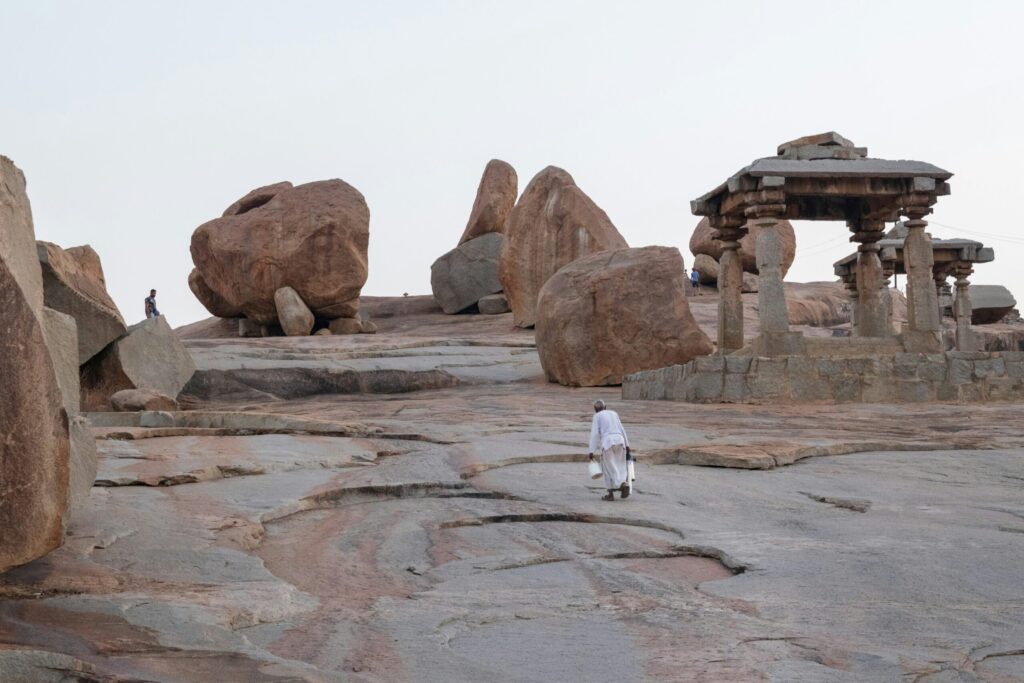
Hemakuta Hill rises gently behind the Virupaksha Temple and is dotted with small shrines and ancient structures. Unlike other parts of Hampi, this area feels intentionally sparse, almost meditative. Sunset here is especially memorable—the ruins glow softly, and the view over the temple complex gives a sense of Hampi’s vastness. It’s a place where travellers often sit quietly, not to take photos, but to reflect.
Matanga Hill: The Best View of Hampi
For those willing to climb a little, Matanga Hill offers one of the most rewarding views in Hampi. The path is rocky but manageable, and the summit opens up to a panoramic view of ruins, river, and boulder-strewn land stretching endlessly. Sunrise from Matanga Hill is particularly special, when the landscape slowly reveals itself in warm light. It helps you understand why this location was chosen for a capital—it is naturally dramatic and defensible.
Tungabhadra River & Coracle Ride
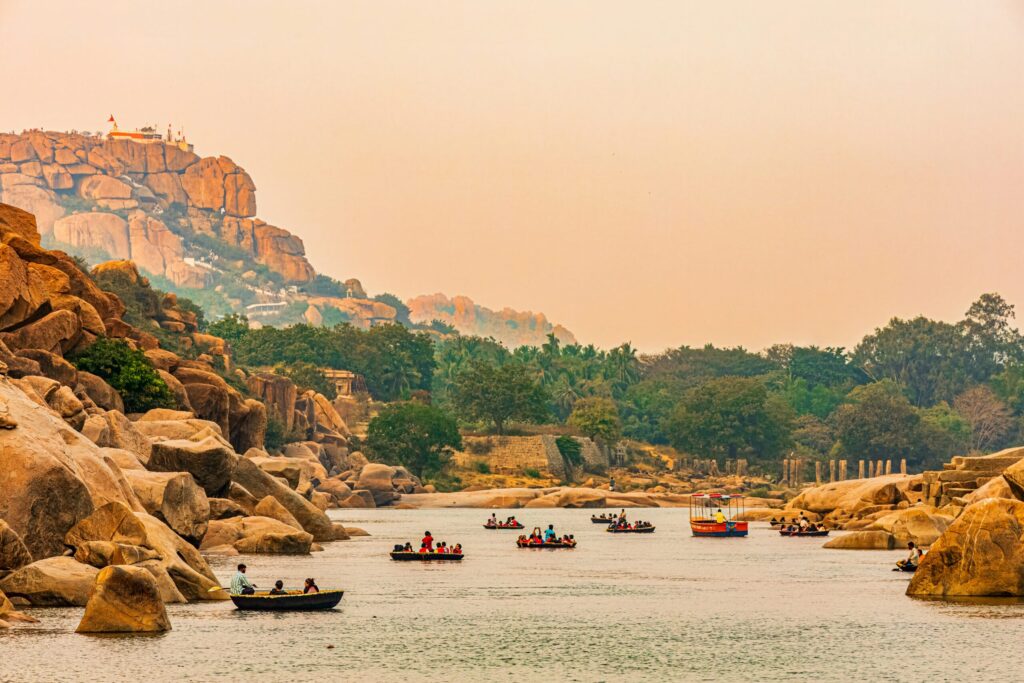
Flowing gently alongside Hampi, the Tungabhadra River adds calm to the otherwise rugged terrain. A coracle ride here is a simple but memorable experience, offering a different perspective of temples, ghats, and village life along the banks. The river also separates the main ruins from the quieter side of Hampi, where life moves slower and evenings are peaceful.
Anegundi: The Older Story Across the River
Across the Tungabhadra lies Anegundi, believed to be older than Hampi itself. This village retains a raw, lived-in character that contrasts with the monumental ruins on the other side. Anegundi offers insight into local culture, folklore, and rural life that continues alongside history. Visiting it completes the Hampi experience, showing that heritage is not only preserved—it is lived.
When is the Best Time to Visit Hampi
The best time to visit Hampi is between October and February, when the weather is comfortable for walking and exploration. Summers can be extremely hot, making it difficult to spend long hours outdoors. Winter mornings and evenings are ideal for exploring ruins slowly and soaking in the atmosphere without fatigue.
Hampi does not overwhelm you with information.
It allows you to discover.
There are no crowds shouting instructions, no fixed routes demanding attention. You choose your pace, your path, your pauses. And in doing so, you begin to understand not just what the Vijayanagara Empire built—but what it valued.
Explore Hampi With World Tours
Hampi deserves a thoughtfully paced itinerary, where exploration is balanced with rest and reflection. World Tours designs heritage journeys that allow travellers to experience Hampi beyond checklists—combining history, landscape, and local context into a seamless journey.
If Hampi has been on your mind, let World Tours help you experience it the way it was meant to be—slowly, meaningfully, and with respect.