


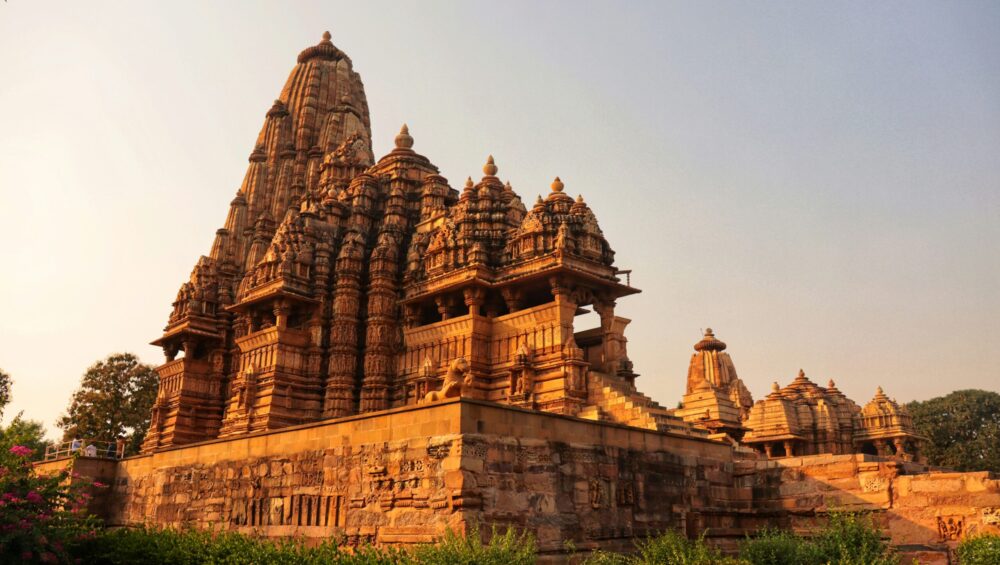
Some places are misunderstood because they are reduced to one idea.
Khajuraho is one of them.
Often spoken about only in whispers or headlines, Khajuraho is, in truth, one of India’s most profound cultural achievements. It is not a place built to shock, but to express — a landscape where spirituality, daily life, desire, devotion, and liberation coexist without apology. To walk through Khajuraho is to understand that ancient India viewed life as whole, not divided.
This is not a destination you rush through.
Khajuraho asks you to slow down, observe carefully, and look beyond assumptions.
The Vision Behind Khajuraho
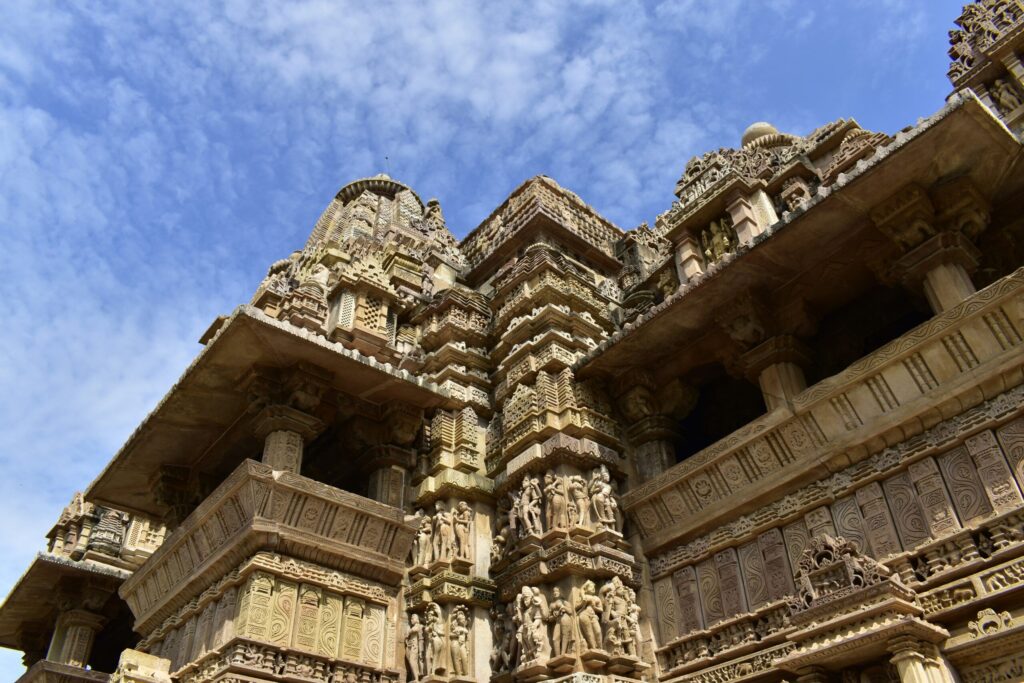
The temples of Khajuraho were built between the 9th and 11th centuries by the Chandela dynasty, during a time when art, philosophy, and faith were deeply intertwined. Originally, over eighty temples stood here; today, around twenty-five remain. Yet even in this reduced form, the site feels complete.
These temples were not meant for mass congregations or political display. They were personal, symbolic, and deeply philosophical — spaces designed to guide the individual from the material world toward spiritual understanding. Every carving, every proportion, and every placement follows a deliberate idea rather than decorative impulse.
Western Group of Temples – The Heart of Khajuraho
The Western Group of Temples is where Khajuraho reveals its most refined artistry. This complex includes the Kandariya Mahadev Temple, Lakshmana Temple, and several others that represent the pinnacle of Nagara-style temple architecture.
As you walk through this group, the symmetry is striking. Towers rise like mountain peaks, symbolising Mount Meru, while the walls are covered in thousands of sculptures. From a distance, the temples appear disciplined and serene; up close, they are alive with movement. This contrast is intentional — a reflection of how order and vitality coexist in life.
Kandariya Mahadev Temple – Devotion in Its Most Elaborate Form
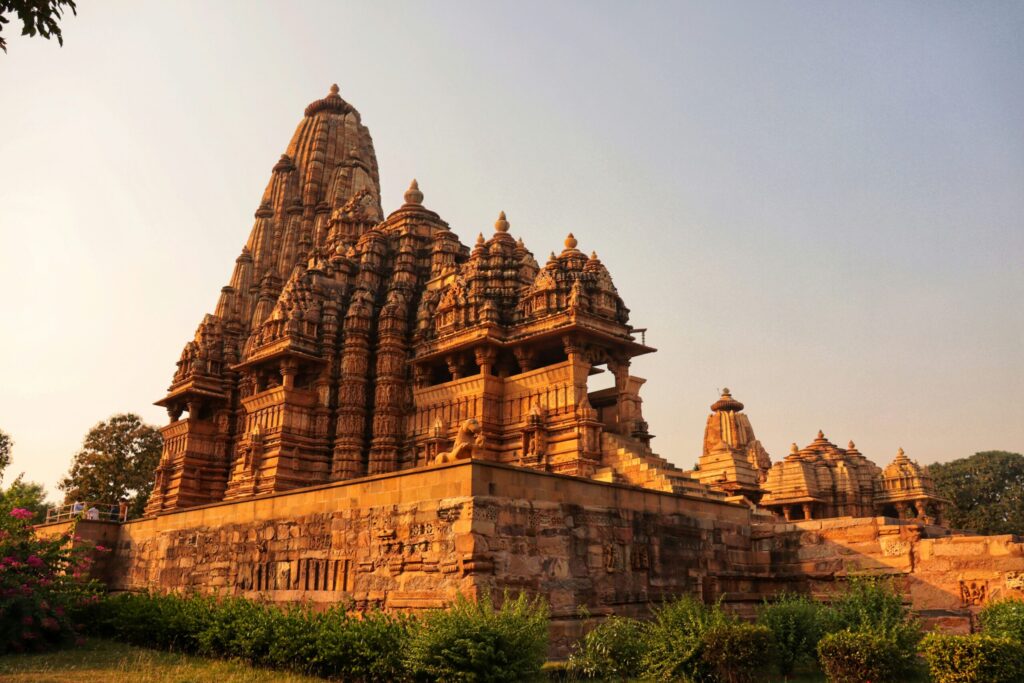
The Kandariya Mahadev Temple is the tallest and most ornate structure in Khajuraho. Dedicated to Lord Shiva, it represents the culmination of Chandela architectural ambition. The temple rises in layers, each filled with sculpted figures that appear to climb toward the heavens.
What makes Kandariya Mahadev extraordinary is not only its scale but its confidence. The sculptures celebrate human emotion, physical beauty, divine energy, and cosmic balance without hierarchy. Here, devotion is not separate from life — it grows out of it.
Standing before this temple, you sense that it was built by people unafraid of complexity.
Understanding the Erotic Sculptures – Beyond Misinterpretation
The erotic carvings of Khajuraho are what made the site famous — and often misunderstood. These sculptures occupy a relatively small portion of the temple walls, yet they attract disproportionate attention.
In traditional Indian philosophy, these figures represent Kama, one of the four essential goals of life, alongside Dharma (duty), Artha (prosperity), and Moksha (liberation). Their placement on the outer walls symbolises worldly experience — something to be acknowledged, understood, and then transcended as one moves inward toward the sanctum.
Rather than being provocative, these carvings reflect acceptance — of desire as part of existence, not something to deny or hide. This perspective is what makes Khajuraho intellectually powerful even today.
Eastern Group of Temples – Spiritual Diversity
The Eastern Group of Temples offers a quieter, more introspective experience. This area includes Jain temples such as the Parsvanath Temple, which display restraint, precision, and philosophical clarity.
These temples remind visitors that Khajuraho was not limited to one belief system. Jainism, Hinduism, and local traditions coexisted here peacefully, sharing artistic language while expressing distinct spiritual paths. The carvings here are subtler, the atmosphere calmer, making it an excellent place for reflection.
Southern Group of Temples – Silence and Space
The Southern Group of Temples is often missed by hurried travellers, but it offers something invaluable — space. With fewer visitors, this area allows you to experience Khajuraho without distraction.
Temples like Duladeo and Chaturbhuj feel more contemplative, less ornate, yet deeply expressive. The quieter surroundings give you time to notice details — the way light falls on stone, the balance of form, the absence of excess.
Khajuraho Dance Festival – Art Returns to Its Origin
Every year, the Khajuraho Dance Festival brings classical dancers from across India to perform against the backdrop of the temples. This is not entertainment; it is continuity. Dance, sculpture, rhythm, and movement reunite, reminding visitors that these temples were once part of a living cultural ecosystem.
If you visit during the festival season, Khajuraho feels especially alive — not crowded, but resonant.
Best Time to Visit Khajuraho
The ideal time to visit Khajuraho is between October and March, when the weather is comfortable for walking and exploration. Summers are extremely hot, and monsoons can make travel inconvenient.
Winter mornings and late afternoons are perfect for temple visits, allowing you to see carvings clearly and spend time without fatigue.
Khajuraho does not tell you what to believe.
It invites you to understand.
It challenges modern discomfort with complexity and reminds us that Indian civilisation once embraced life in its entirety — body, mind, spirit, and society — without contradiction. That is why Khajuraho feels timeless, not ancient.
Experience Khajuraho With World Tours
Khajuraho deserves context, not just a camera. World Tours designs heritage journeys that allow travellers to understand the philosophy, artistry, and cultural depth of sites like Khajuraho, while ensuring comfort and thoughtful pacing.
If you are ready to see Indian heritage beyond surface narratives, Khajuraho is a powerful place to begin — and World Tours is here to plan it for you.