


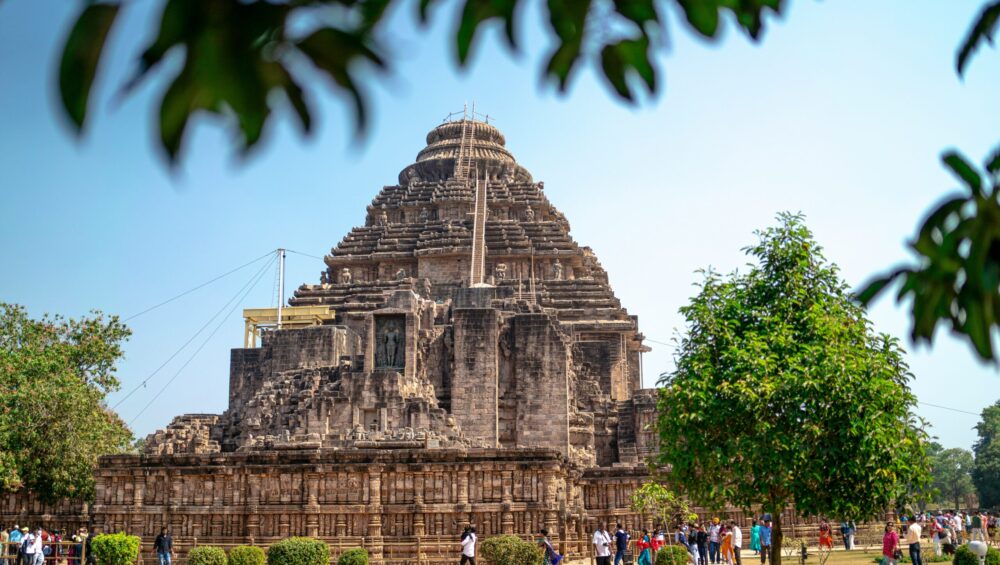
There are places you visit, and then there are places that quietly change the way you look at history.
The Konark Sun Temple definitely falls in the second category.
Standing on Odisha’s eastern coast, not far from the Bay of Bengal, Konark does not greet you with towering gates or loud crowds. Instead, it slowly reveals itself; carved stone after carved stone until you realise you are standing before one of the most ambitious architectural visions India has ever created. Even in its ruined form, the temple commands silence, respect, and awe.
This is not just a monument.
It is a reminder of what Indian civilization once imagined and achieved.
A Temple Built for the Sun, the Sea, and Time Itself
Konark was built in the 13th century by King Narasimhadeva I of the Eastern Ganga dynasty, at a time when Odisha was a powerful kingdom with strong maritime links and deep spiritual roots. The temple was dedicated to Surya, the Sun God not merely as a deity, but as the cosmic force that governs time, seasons, and life itself.
The location was chosen carefully. Facing east, the temple was designed so that the first rays of the rising sun would fall directly on the sanctum. Imagine pilgrims arriving at dawn centuries ago, watching sunlight touch the stone deity, a daily ritual that tied astronomy, devotion, and architecture into one sacred act.
Today, the sanctum no longer stands intact, but the intention behind it is still unmistakable.
The Chariot of the Sun – Architecture That Thinks, Moves, and Tells Stories
What makes Konark extraordinary is not just its scale, but its idea.
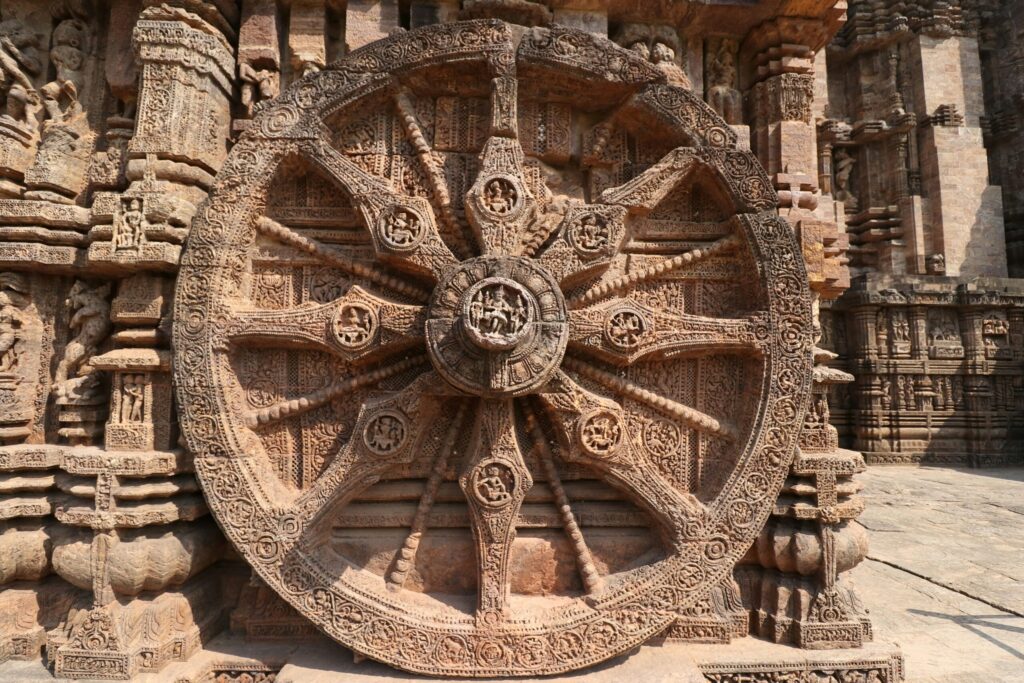
The entire temple was conceived as a massive stone chariot, pulled by seven horses and mounted on twenty-four wheels. These are not decorative elements — they are deeply symbolic. The horses represent the days of the week, the wheels represent time, and together they express the eternal movement of the sun across the sky.
As you walk around the complex, the wheels draw you in. Each one is carved with astonishing precision, its spokes capable of functioning as a sundial even today. Long before modern instruments, the builders of Konark understood time with scientific accuracy — and chose to express it through art.
Standing beside these wheels, you don’t just admire craftsmanship; you feel humbled by knowledge passed down through stone.
Carvings That Capture an Entire Civilisation
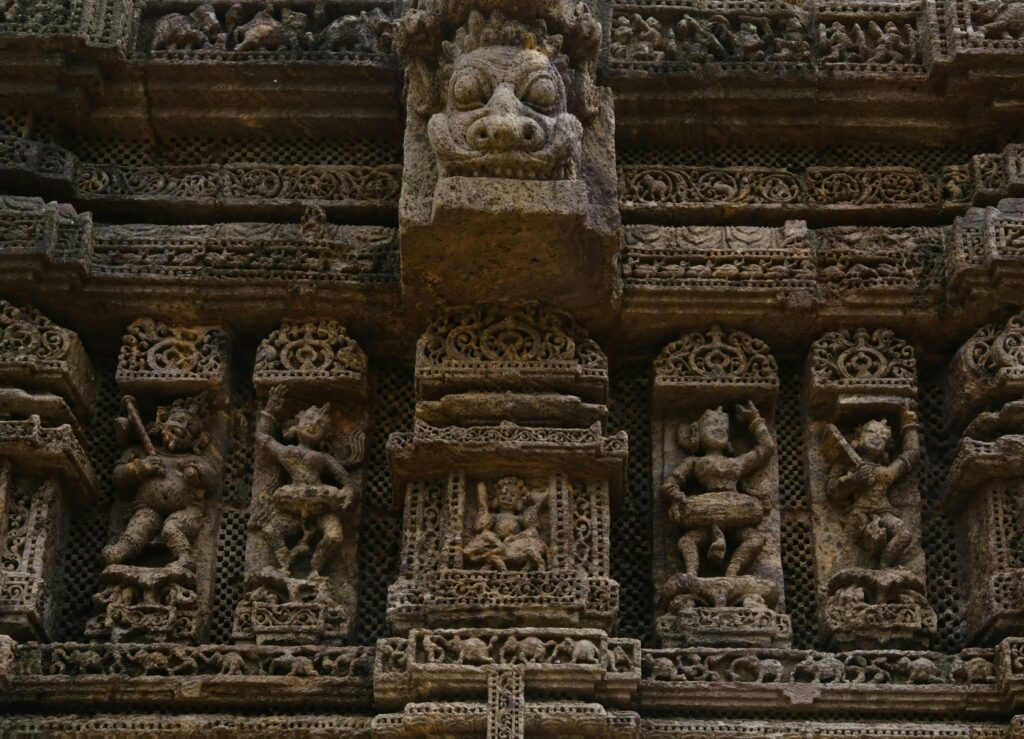
One of the most powerful aspects of Konark is how alive it feels.
The walls are covered with carvings that go far beyond gods and mythology. You see musicians mid-performance, dancers frozen in graceful movement, women adjusting jewellery, warriors on horseback, animals, lovers, storytellers. These are not abstract figures, they are moments from everyday life, captured permanently in stone.
Some carvings are intimate and sensual, often misunderstood when seen out of context. But in Konark, they reflect balance between the spiritual and the human, the cosmic and the earthly. They remind us that ancient Indian philosophy did not separate life from devotion; it embraced both fully.
Walking through the complex feels like moving through a visual history book, one that doesn’t lecture, but gently shows.
Konark is no longer an active temple, but its cultural power has never faded.
It continues to shape Odisha’s identity through art, dance, and tradition. The annual Konark Dance Festival brings classical dancers from across India to perform against the backdrop of the temple, a beautiful continuation of its artistic legacy. In those moments, stone and movement come together, just as they did centuries ago.
For Indian travellers especially, Konark is a place of quiet pride. It reminds us that long before global recognition, our ancestors were already building with imagination, precision, and deep philosophical thought.
UNESCO recognition did not make Konark important; it merely acknowledged what India already knew.
When To Visit Konark?
The best time to visit Konark is between October and February, when the heat softens and the coastal breeze makes exploration comfortable. Winter light also enhances the carvings, casting gentle shadows that bring out their depth and detail.
Early mornings are especially special. The complex is quieter, the air is cool, and the rising sun the very force this temple was built for, still plays its part in the experience.
How To Reach Konark and Plan It Right
Konark is easily reached from Bhubaneswar, which serves as Odisha’s main airport and rail hub. Many travellers combine Konark with Puri and Bhubaneswar, creating a journey that blends spiritual, architectural, and coastal experiences.
The drive from Puri to Konark along the coast is scenic and unhurried, making the journey as meaningful as the destination itself.
Beyond the Temple – Completing the Experience
Just a short distance from the temple lies Chandrabhaga Beach, a quiet stretch of sand known for its sunrises. After absorbing the intensity of Konark’s history, spending time here allows the experience to settle.
When paired with Puri’s Jagannath Temple or Bhubaneswar’s ancient temples, Konark becomes part of a larger story — one that shows Odisha as a land where faith, learning, and art have always walked together.
Why Konark Should Be on Every Indian Traveller’s List
Konark Sun Temple is not about ticking off a UNESCO site.
It is about standing before something created with devotion, intellect, and courage — and realising that our cultural inheritance is far deeper than we often acknowledge.
You don’t rush through Konark.
You walk slowly.
You look closely.
And you leave with a quiet sense of gratitude.
Experience Konark With World Tours
Heritage sites like Konark deserve thoughtful travel — not rushed visits. World Tours designs Odisha itineraries that give Konark the time and context it deserves, combining it with nearby spiritual and cultural landmarks for a balanced, meaningful journey.
If you’ve been thinking about exploring India’s heritage more deeply, Konark is a beautiful place to begin. Let World Tours plan it for you.