


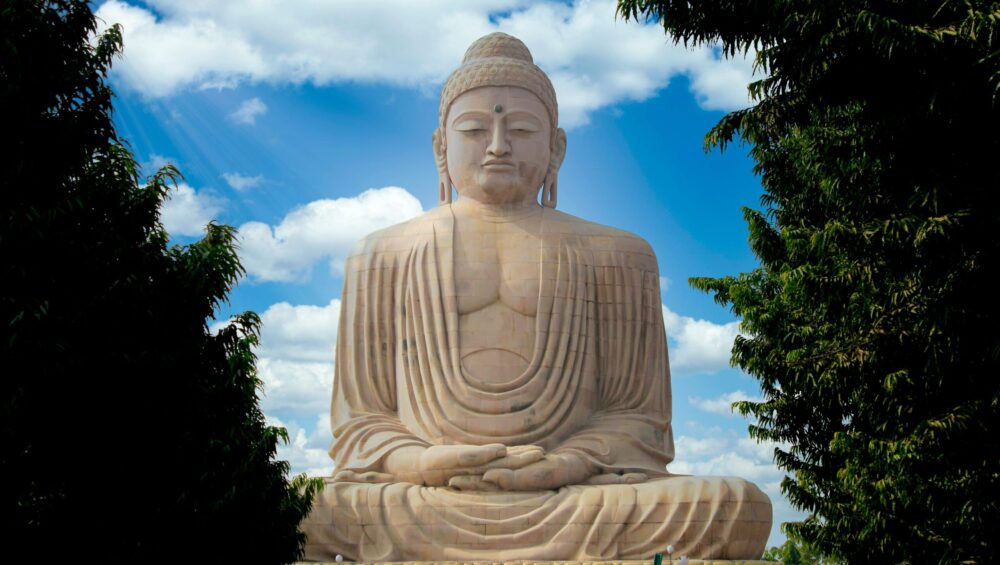
Some places do not need explanation.
They do not impress you with scale or ornament.
They simply hold you.
The Mahabodhi Temple in Bodh Gaya is one such place.
You may arrive with curiosity, faith, or even just a travel plan — but you leave with a sense of stillness that is difficult to put into words. This is not because of what you see, but because of what you feel when you stand here: the quiet understanding that something timeless happened on this ground, and that it continues to echo.
The Place Where a Man Sat Still & the World Changed
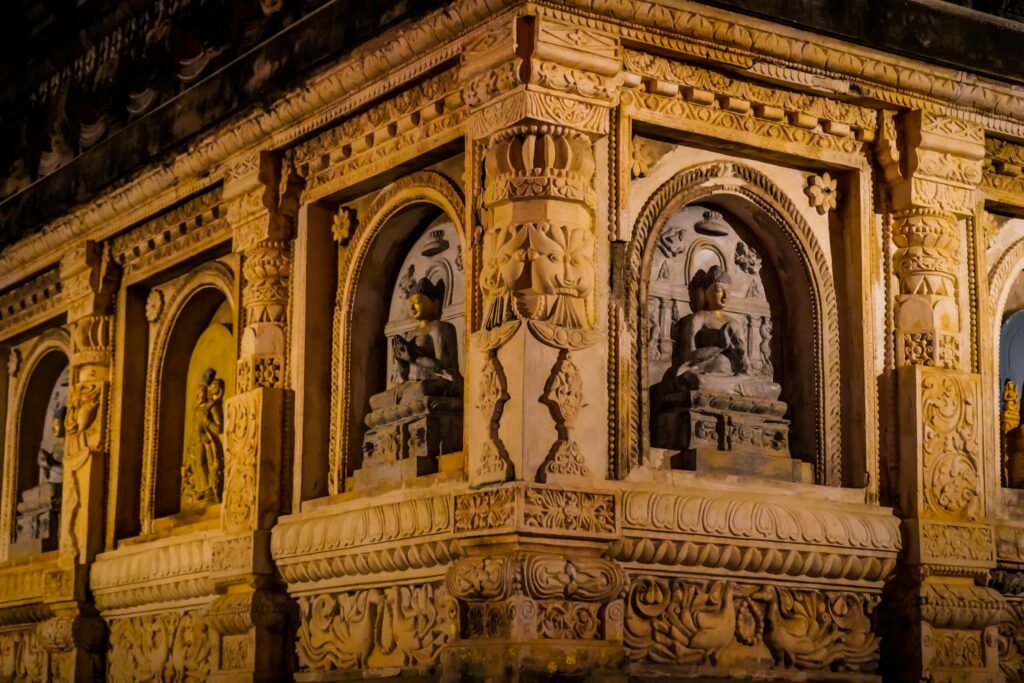
More than 2,500 years ago, under a peepal tree by the banks of the Phalgu River, a seeker named Siddhartha Gautama sat down in meditation and resolved not to rise until he understood the nature of suffering and liberation. What followed was not a miracle in the dramatic sense, but something far more profound — awakening through stillness.
Bodh Gaya marks the exact place where Siddhartha became the Buddha.
The Mahabodhi Temple stands beside the Bodhi Tree, grown from the lineage of that original tree, protecting a moment that reshaped spiritual thought across Asia and beyond. Unlike many religious sites that celebrate grandeur, Bodh Gaya honours simplicity, patience, and inner clarity. The power of this place lies in what it doesn’t demand from you.
A Temple That Feels Less Like Architecture and More Like Presence
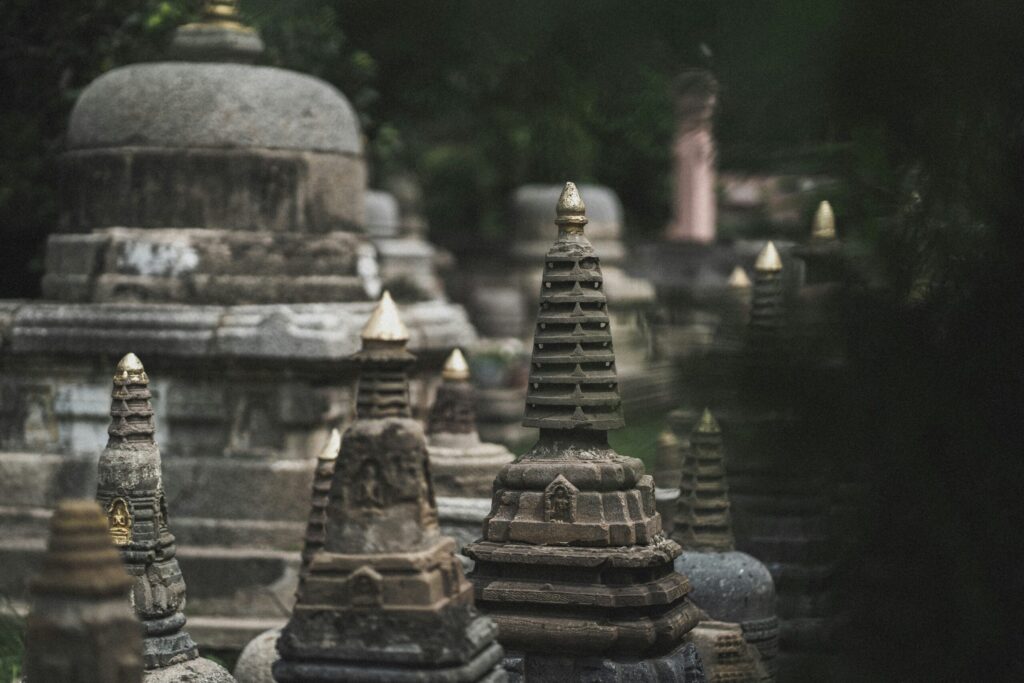
The Mahabodhi Temple itself rises with quiet confidence. Built primarily in brick, with a tall, tapering spire, it does not overwhelm the visitor. Instead, it draws the eye upward gently, mirroring the inward journey the Buddha undertook.
As you walk around the temple, you’ll notice pilgrims from all over the world — monks in maroon, saffron, and grey robes; lay practitioners sitting cross-legged for hours; travellers watching respectfully from a distance. There is no rush here. No one asks you to move on. Silence is not enforced — it is naturally respected.
The temple complex is designed for circumambulation, reflection, and pause. Every path invites slowness.
The Bodhi Tree – A Living Witness
At the heart of the complex stands the Bodhi Tree — not the original, but its spiritual descendant. And yet, standing before it, lineage feels irrelevant. What matters is continuity.
People sit beneath its branches for hours, sometimes days. Some meditate. Some pray. Some simply sit with closed eyes, breathing. There is no single way to engage with the tree, and that freedom is deeply moving. It reminds you that spiritual journeys are personal, not prescribed.
In winter, the air is cool and crisp, making long hours of sitting comfortable. The early morning light filtering through the leaves creates an atmosphere that feels both grounding and expansive.
A Global Centre of Quiet Faith
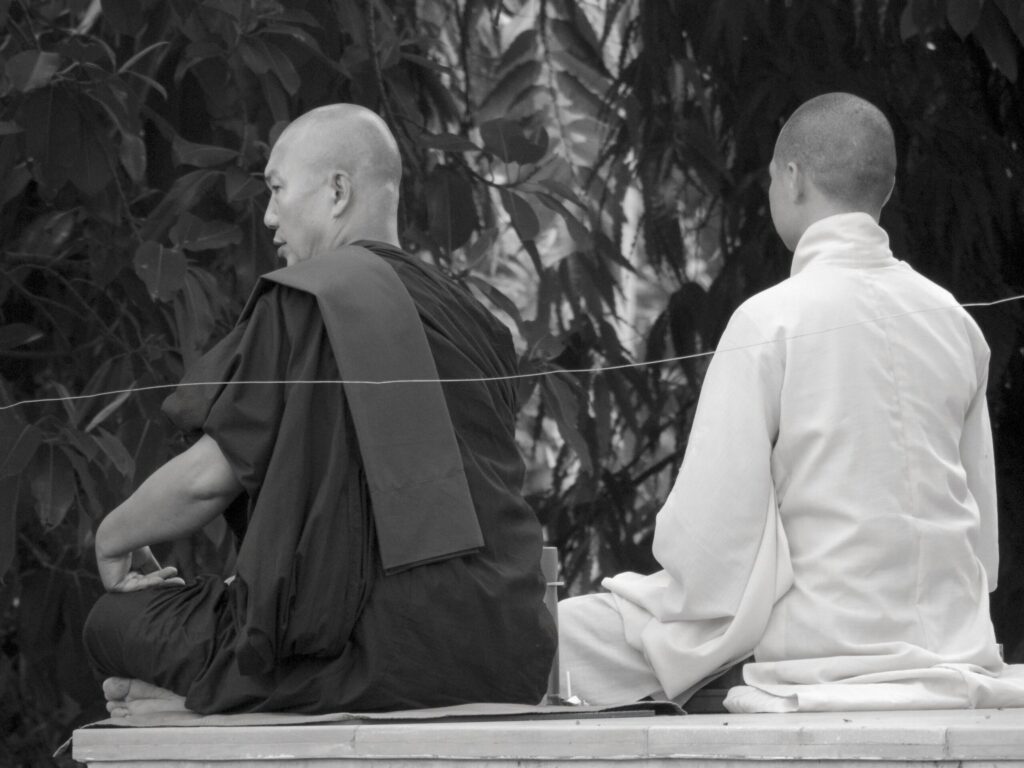
What makes Bodh Gaya truly unique is its international spiritual presence. Temples and monasteries from Thailand, Japan, Bhutan, Sri Lanka, Myanmar, Tibet, and other Buddhist regions surround the Mahabodhi complex. Each reflects its own cultural interpretation of Buddhism, yet all coexist peacefully.
Walking through these monasteries feels like travelling across Asia without leaving Bihar. And yet, despite the diversity, there is no sense of noise or competition. The shared understanding of purpose — reflection, compassion, mindfulness — binds everything together.
Bodh Gaya does not belong to one country or culture alone. It belongs to anyone who seeks understanding.
When Is the Best Time to Visit Bodh Gaya
Winter, from November to February, is the most rewarding time to visit Bodh Gaya. The weather is gentle, days are pleasant, and nights are cool without being harsh. This climate supports long meditation sessions, slow walks, and unhurried exploration of the temple complex.
It is also during winter that Bodh Gaya sees monks and practitioners arriving for extended stays, creating an atmosphere of collective stillness. The absence of heat and monsoon crowds allows the town to breathe — and so do you.
How to Reach Bodh Gaya
Bodh Gaya is accessible via Gaya Airport, with good road connections from Patna. While the town itself is small, the experience benefits from time rather than movement. This is not a place to rush through on a checklist itinerary.
Many travellers choose to spend two to three days here, allowing the rhythm of the place to settle in. Early mornings at the temple, afternoons exploring monasteries, and quiet evenings reflect the natural flow of Bodh Gaya.
What Bodh Gaya Teaches Without Speaking
You do not come to Bodh Gaya to be entertained.
You come to be reminded.
Reminded that clarity often comes through patience.
That silence can be shared without discomfort.
That stillness is not emptiness, but awareness.
Even for travellers who do not follow Buddhism, the experience resonates on a human level. In a world that celebrates movement and noise, Bodh Gaya offers the courage to pause.
Including Bodh Gaya in a Larger Journey
Bodh Gaya fits naturally into a broader heritage and spiritual circuit, often combined with destinations like Nalanda, Rajgir, or Varanasi. When planned thoughtfully, it becomes part of a journey that explores learning, philosophy, and faith across centuries.
However, even as a standalone destination, Bodh Gaya feels complete. It does not ask for comparison. It stands quietly on its own.
Experience Bodh Gaya With World Tours
Places like Bodh Gaya require sensitivity, not speed. World Tours designs heritage and spiritual journeys that respect the rhythm of such destinations, allowing travellers the time and space they need to truly experience them.
Whether you wish to include Bodh Gaya in a larger cultural itinerary or visit it as a focused spiritual journey, we plan with care, context, and comfort.
If Bodh Gaya has been calling you, let World Tours help you answer that call.